Analysis: "Grass" from Heroes of Might & Magic III
Composer: Paul Romero
Year: 1999
Overview
‘Grass’ is a short piece from the video game 'Heroes of Might & Magic III' which plays on the world map whenever a hero is on grassy terrain. The time signature is 6/4 with a tempo of approximately 143 BPM. Featuring long legato string melodies and an energetic pizzicato accompaniment, it is playful and dreamy while also evoking feelings of contemplation and adventure. The piece is orchestrated entirely for strings and harpsichord. I have excluded the harpsichord part from this analysis because it is quite buried in the mix, improvisatory, and plays a supportive role. The following analysis is based upon my own transcription of the original game audio. I encourage you to listen to the full piece here before reading ahead.
Form
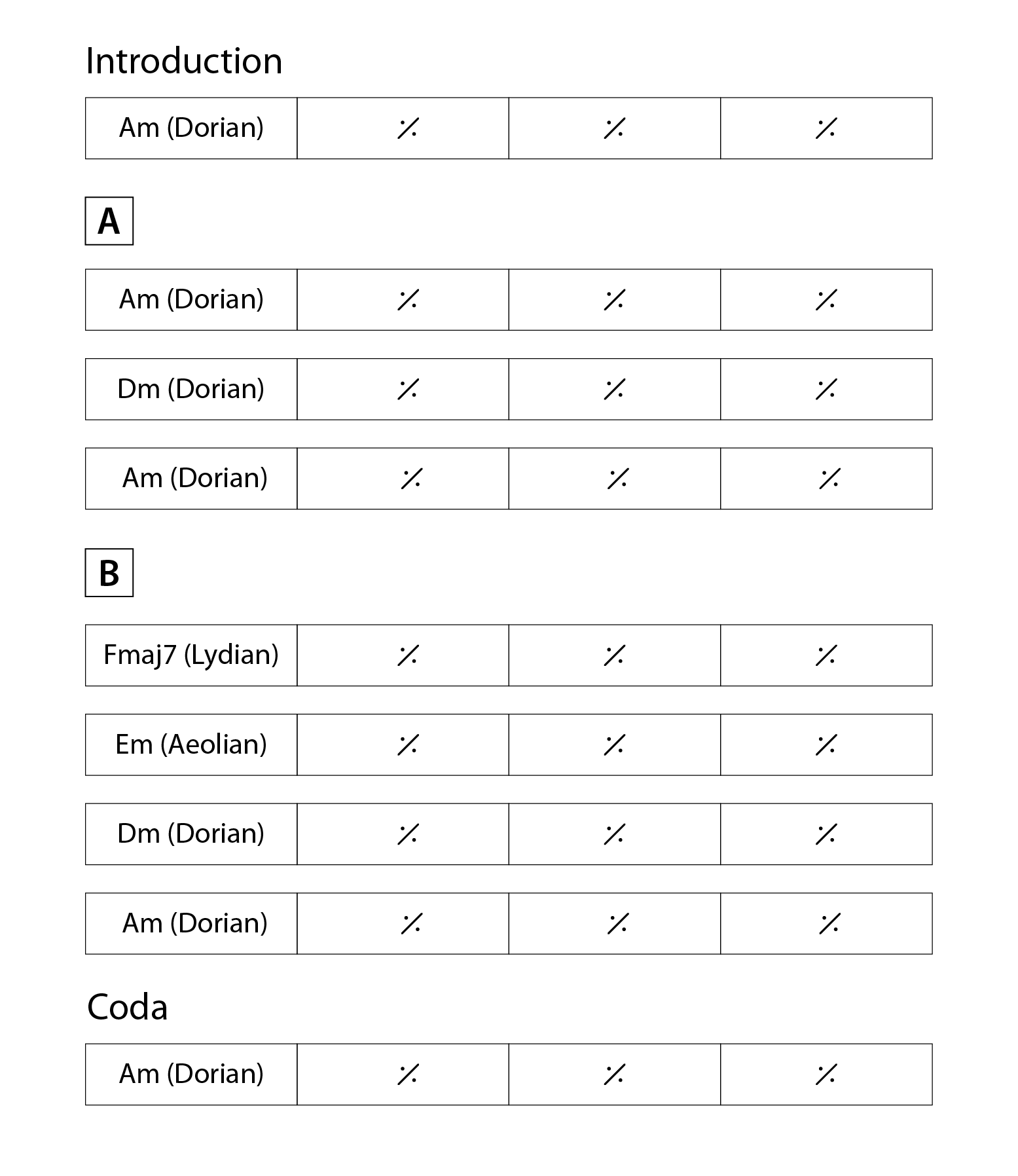
While the piece is fairly homogenous in its content, it is reasonable to divide it into two main sections bookended by a 4-bar introduction and a 4-bar coda. Although there is no chordal instrument, a progression of chords can be inferred from the combined elements. The A section is contemplative in mood and establishes the tonic area of A Dorian with a brief foray into D Dorian. The B section is more heroic in character, beginning in F Lydian and moving through other modal areas before eventually cadencing in A Dorian as well.
Introduction
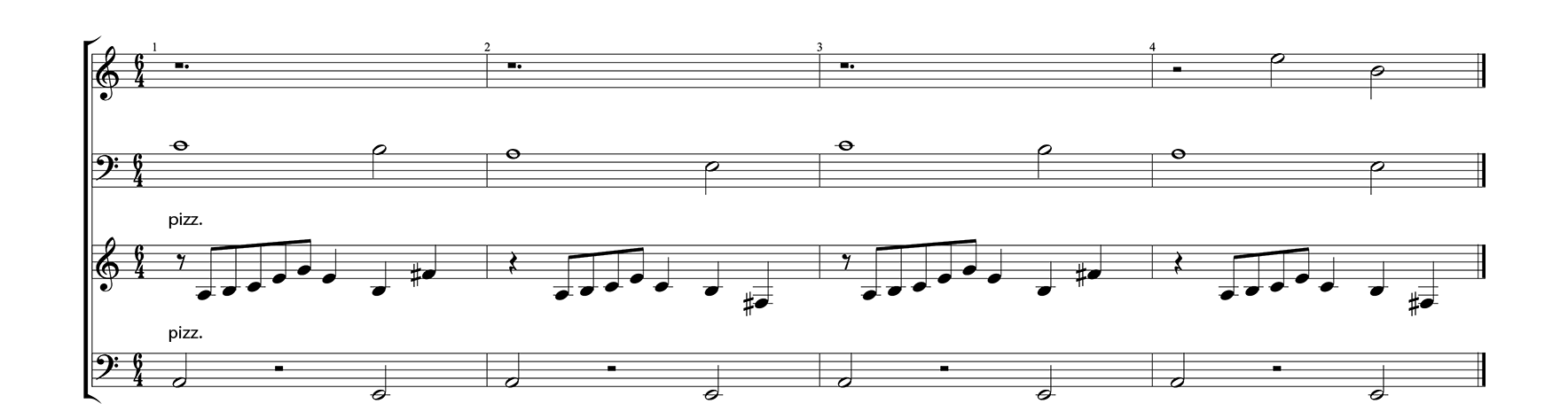
The piece begins with a 4 bar introduction in A Dorian consisting of three elements. The strings play a repeating 2 bar pizzicato ostinato which outlines an A minor 7th chord, as well as emphasizing some color tones (B, F#) towards the end of each bar, while the basses alternate between the root (A) and fifth (E). This accompaniment divides 6/4 time signature into a lopsided rhythmic pulse of 4 + 2 quarters. A slow legato string melody outlines an A minor triad with an added ninth (B). Finally, a very soft and high string line also enters in bar 3 which is not included in the notation below.
A Section
The accompaniment continues to repeat as the main melody enters with a pickup in bar 5. It begins with a descending pattern in fourths through the notes E, B, and F#, which lands on the downbeat of bar 5. This accented F# immediately creates intrigue and tension, as it is a colorful extended tone (the 13th of A Dorian). Throughout the phrase, other upper chord tones such as the 7th (G) and 11th (D) are emphasized, creating a lush, impressionistic melody.
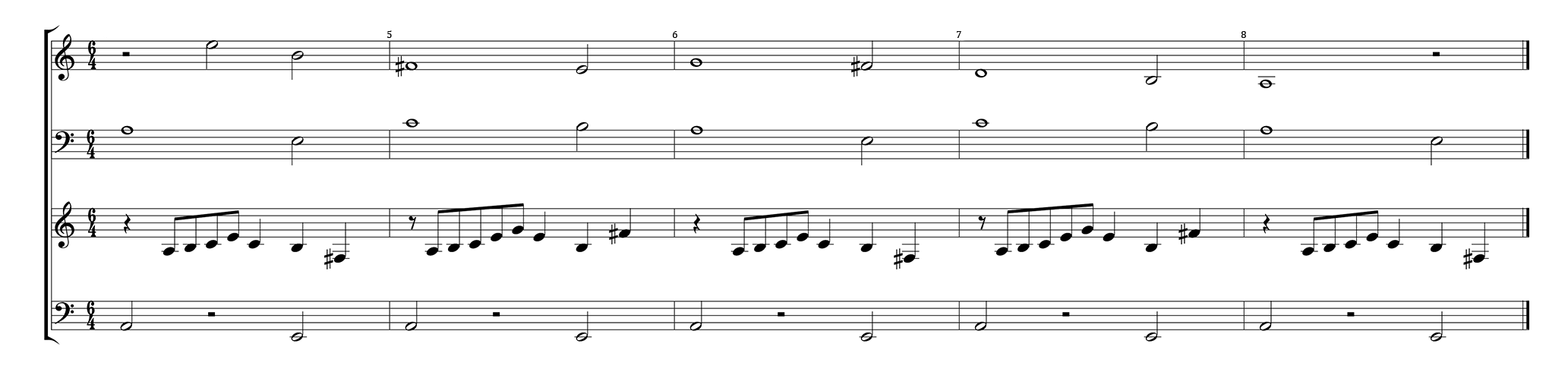
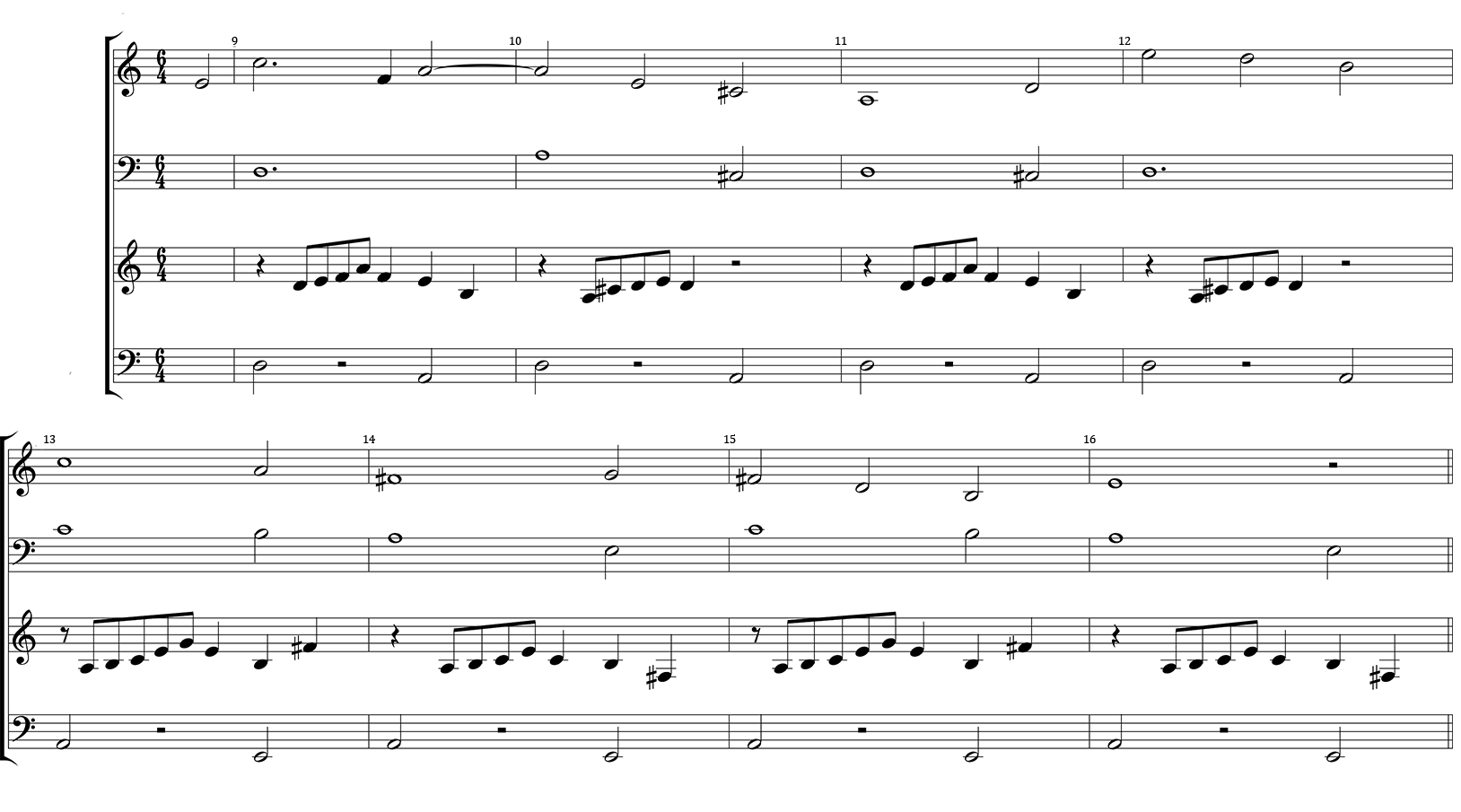
In bar 9, the harmony moves up a fourth. The overall pitch collection implies D Dorian, however the sharpened 7th (C#) is also used throughout this section adding interest and color, and evoking the romantic and mysterious sound of the melodic minor scale. Although mixed 7ths are used, care has been taken to avoid any clashes between them. This second melodic phrase is longer, continuing through to bar 13 as the harmony returns to A Dorian, and finally coming to rest on the 5th (E) in bar 16.
B Section
The B section begins on bar 17 with a shift to F Lydian, creating a brighter, more uplifting sound, however the characteristic #11 (B) of the mode only occurs once in bar 18. The ostinato becomes sparser here and adapts to the new harmony, outlining an F major 7 chord. While the accompaniment maintains the same texture as in the A section, the lead melody soars higher with a series large leaps. In bars 21-24 the implied chord is E minor, however the exact mode is ambiguous due to the absence of the 6th degree, although the presence of F# in the accompaniment suggests E Aeolian.
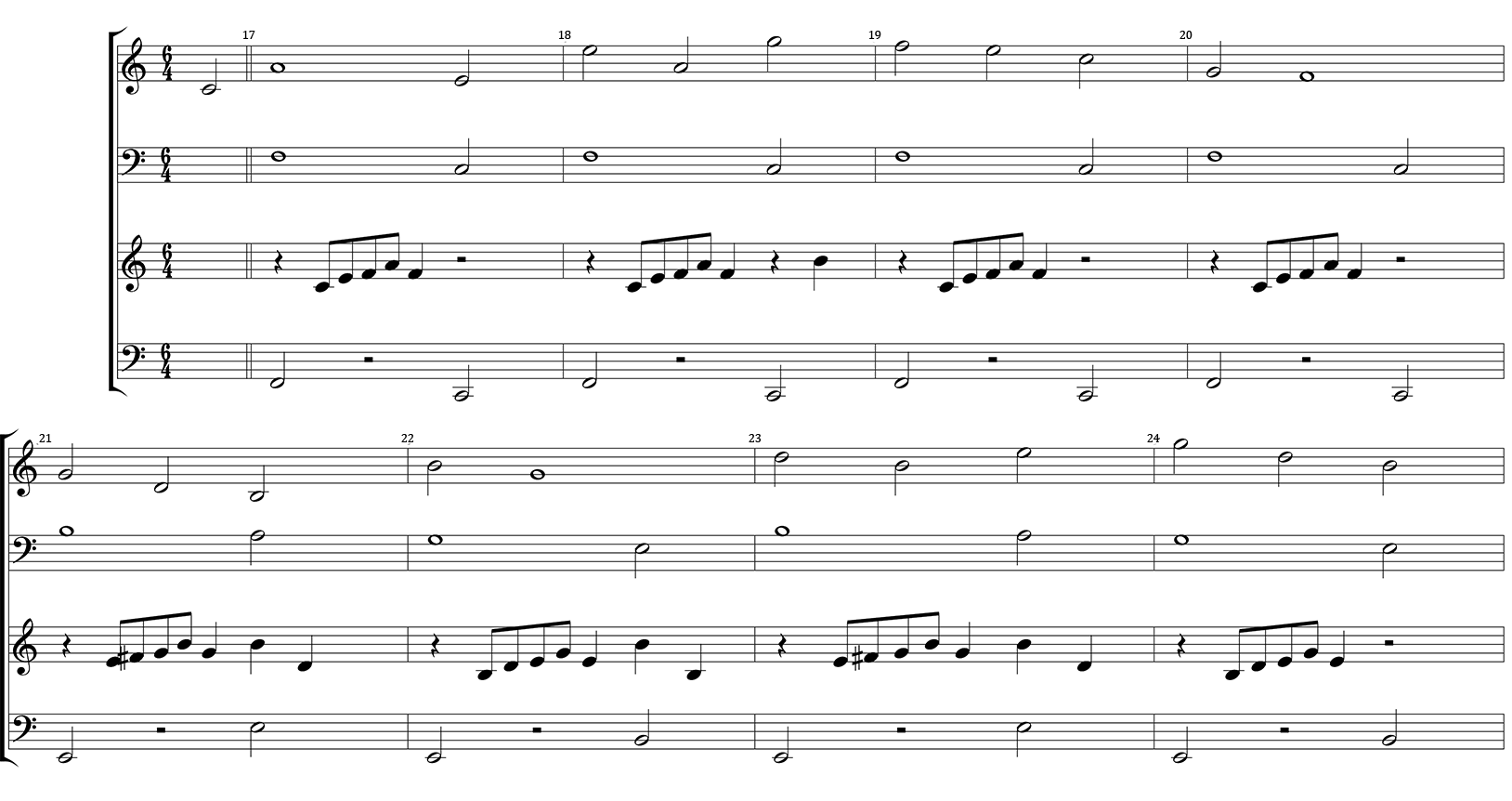
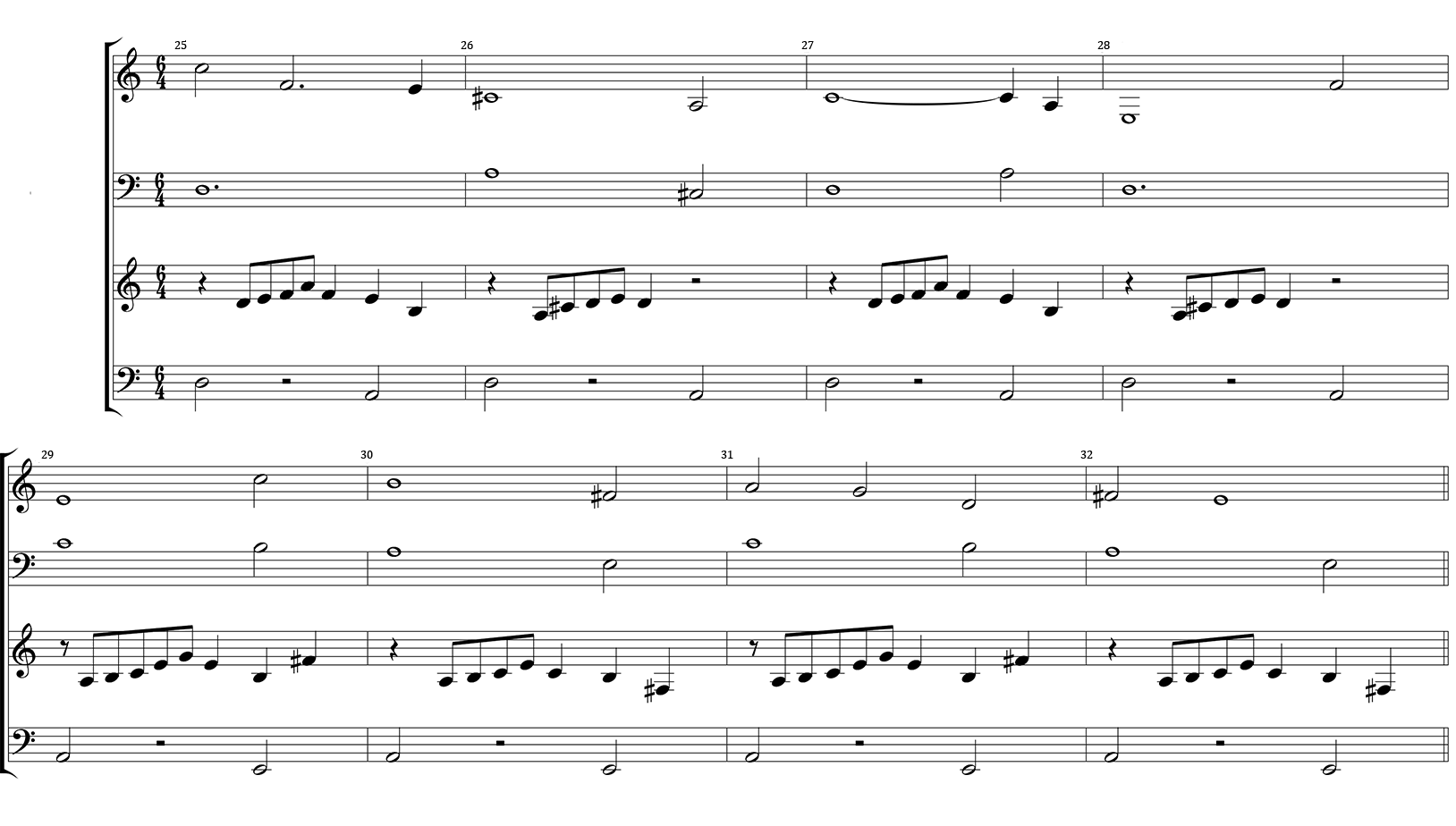
Bars 25-28 once again return to D Dorian with the melody plunging downwards to its lowest point in the composition. A mixture of sharpened and natural sevenths is present in the melody and accompaniment, as seen in the A section. Once again, dissonant clashes between these mixed 7ths have been avoided. In bar 29 the harmony returns to the tonic harmony of A Dorian. The melody rises and falls once more, finally coming to rest on the 5th (E). The 4 bar coda simply continues the accompaniment after the melody has finished.
Melodic Analysis
The melody has a wide range, spanning over 3 octaves from E3 to G5, with each phrase having a wave-like contour characterized by larger leaps upwards, followed by smoother descents. The diagram below represents the contour of the main string melody throughout the entire piece, with dashed lines representing connections between phrases.
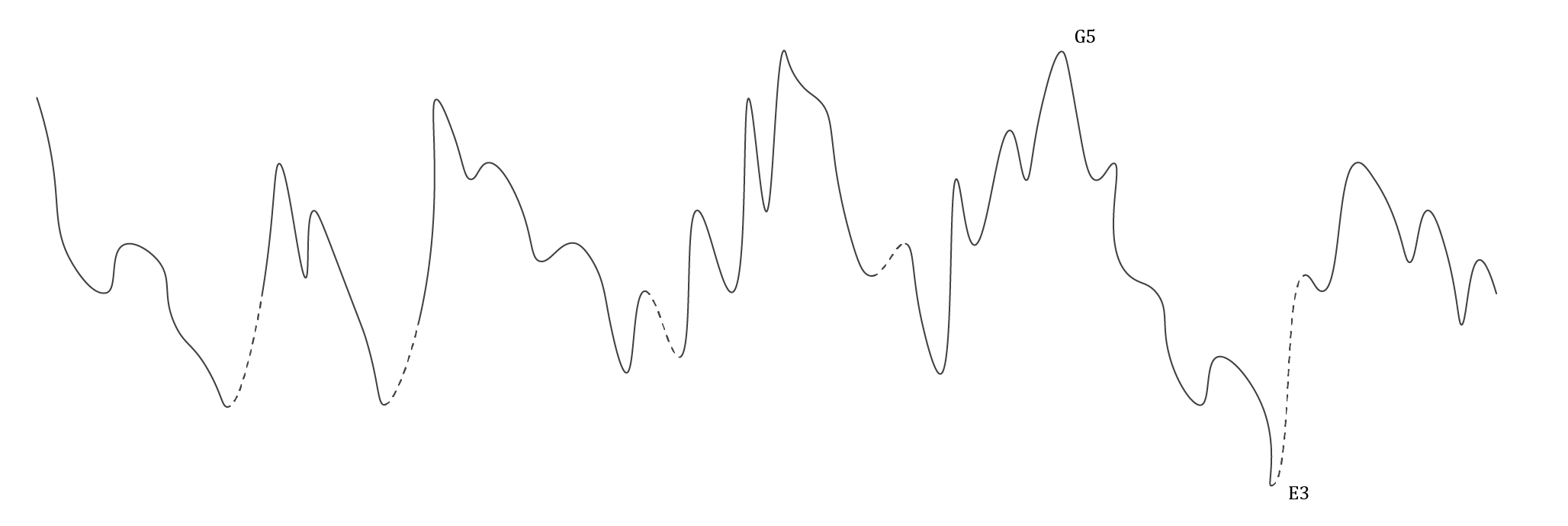
It is predominantly made up of intervals of a 3rd or greater with relatively few stepwise connections. In keeping with the contemplative and heroic mood, melodic use of the tritone is completely avoided. There are, however, several dramatic leaps of a 6th or greater which create anticipation (marked in red). These leaps are invariably followed by an immediate descent to resolve tension and restore balance.
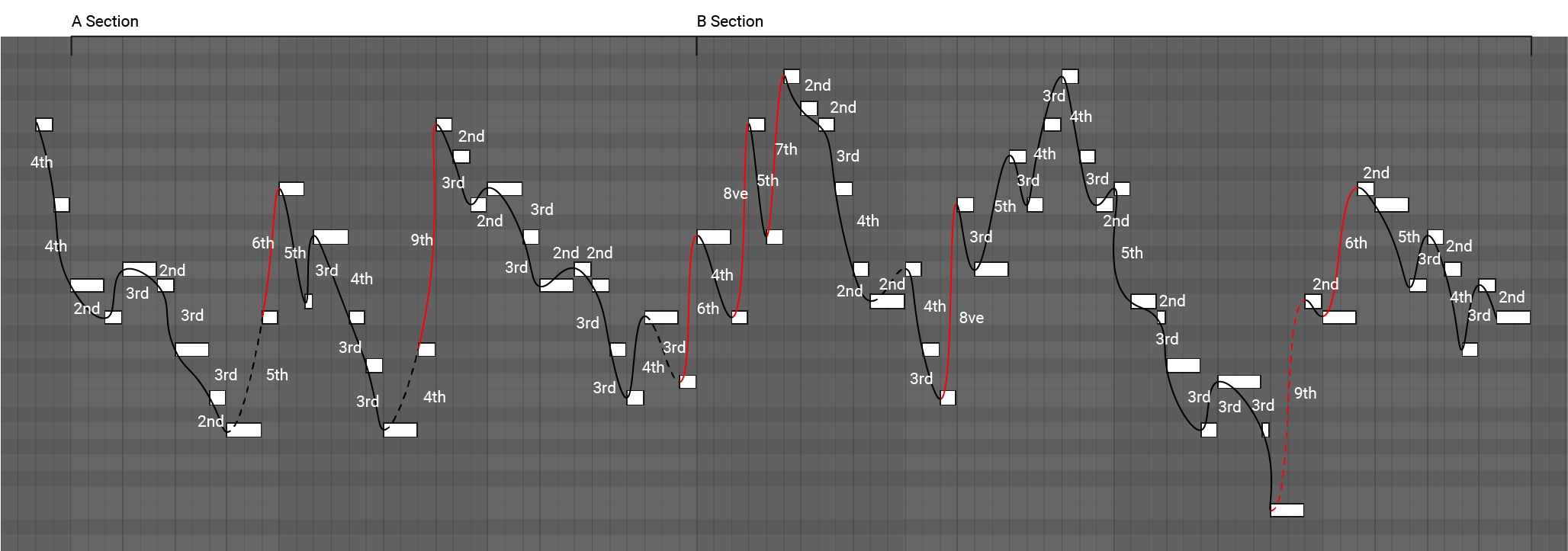
The melody seems largely through-composed with little obvious motivic repetition, however there are some features which help create coherence and unity, such as the use of similar rhythmic values and intervals throughout. The only apparent motivic repetition occurs in the B section between bars 8-16. The melodic contour of both phrases here follows a pattern of undulating upwards towards a peak and then smoothly descending.
The overall contour also bears resemblance to a 'plot diagram,' a well-known framework to plan narrative structure. We begin with an inciting event of relatively high intensity (marked as A below) followed by series of events, each rising in intensity (B,C, and D). These build towards a climax (E), which finally resolves with a denouement (F). Whether or not the composer consciously followed such a framework, it is no coincidence that maps so neatly onto the melody. Similar frameworks emerge naturally in many musical forms, from simple pop songs and 12-bar blues, through to symphonies. For example, the climax of any composition typically occurs near the two-thirds point. If it occurs much earlier, the following material will lack momentum and purpose. If it occurs too late, the ending may feel abrupt and lack closure.
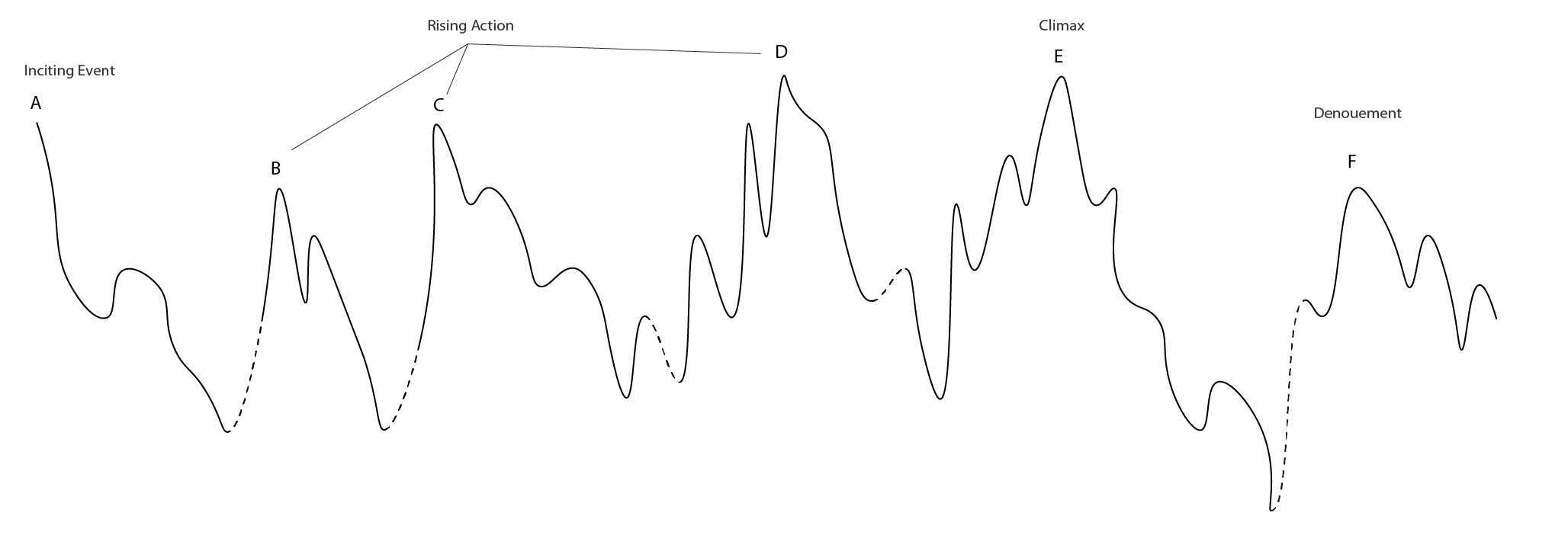
An astute observer may notice that the uppermost G5 actually appears twice in the melody (at points D and E). This slightly undermines the power of the climax, however on the second repetion the note appears on an accented beat, giving it more weight and significance. It is also worth mentioning that while pitch is important in measuring intensity, there are other factors which contribute to it such as harmony (the level of dissonance and distance to the perceived tonal center), rhythm (the level of density and syncopation), and dynamics.
Many of the above described characteristics of this melody make it less immediately memorable and singable, however they also imbue it with unpredictability, drama, and grandeur, which can be desirable in the context of video game background music. Melodies which are overly simple and predictable can become monotonous, tiring, and even irritating if looped over long periods of time, while complexity and unpredictability keep the music fresh and engaging on repeated listens. Rather than providing a straightforward singable melody, the music focuses on creating atmosphere, eliciting emotions, and taking the listener on a journey.
Key Insights
The aspect of this composition which I personally find most compelling is the use of modal harmony throughout. At face value, the chords seem to imply A Aeolian (Am, Dm, Em, F); however the slow harmonic rhythm allows each chord to be its own modal area, rather than being heard in a more functional and tonal role. The piece exists in the ambiguous space between modality and tonality, featuring aspects of both systems. While not as overtly modal as something like Herbie Hancock's 'Maiden Voyage' it nevertheless eschews or subverts features of tonal harmony as well (Dorian tonic, a lack of any dominant harmony, plagal cadences, etc.) With each chord change, the mode changes by moving over one position on the circle of 5ths, creating very subtle shifts of color.
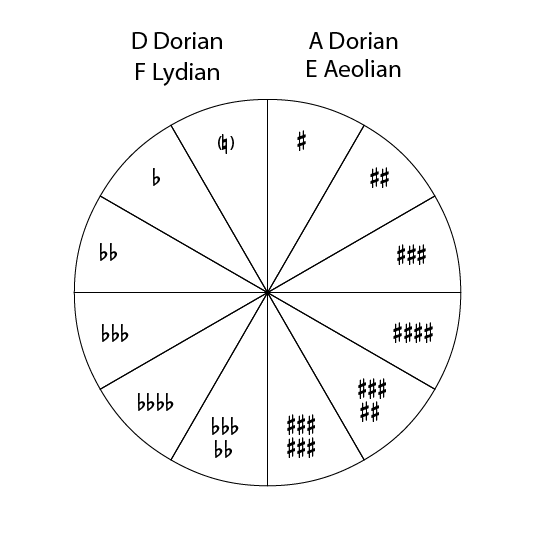
This effect hinges mainly on the note F, which appears sharpened in the brighter modes (A Dorian, E Aeolian) and naturalized in the darker modes (D Dorian, F Lydian). This quasi-modal style was likely used to give the music an archaic, medieval sound, however the music also has characteristics which make it distinctly modern, such as the slow harmonic rhythm and liberal use of upper chord extensions. It is perhaps for these reasons which I found it compelling. It sounds both tonal and non-tonal, both ancient and modern.