Escape Humber VR Experience
A collaborative VR puzzle experience for a space-themed escape room
Escape Humber VR Experience is a VR-based puzzle developed for Return to the Nebula Dawn, a spaceship-themed educational escape room at Humber Polytechnic. The larger project combines physical and digital puzzles to introduce visitors to emerging technologies through collaborative problem-solving.
The VR drone sequence was designed as the final climactic puzzle within this larger experience. Near the end of the escape room sequence, one participant enters VR to pilot a drone outside the ship, while teammates remain in the physical environment and provide navigational support.
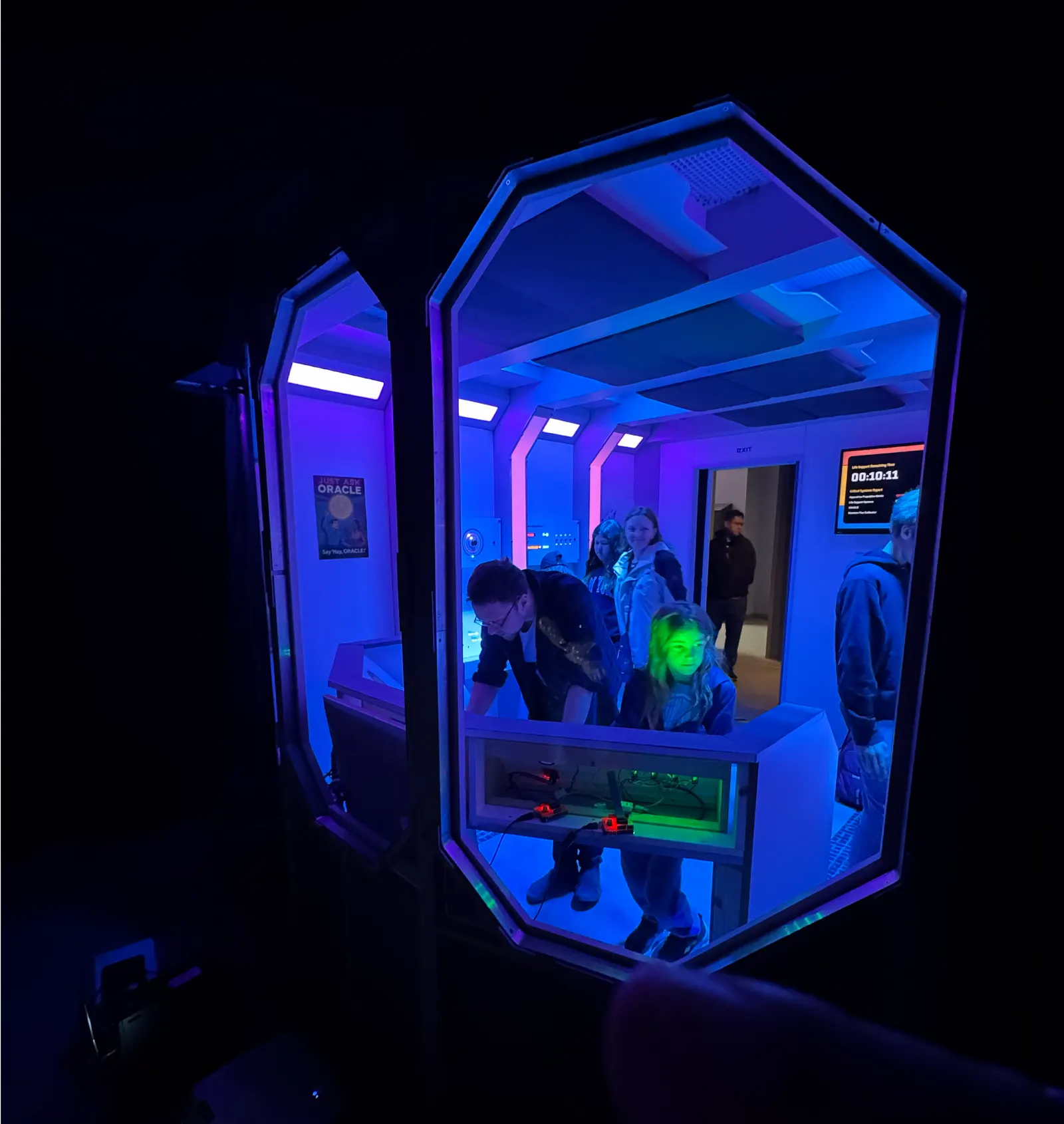
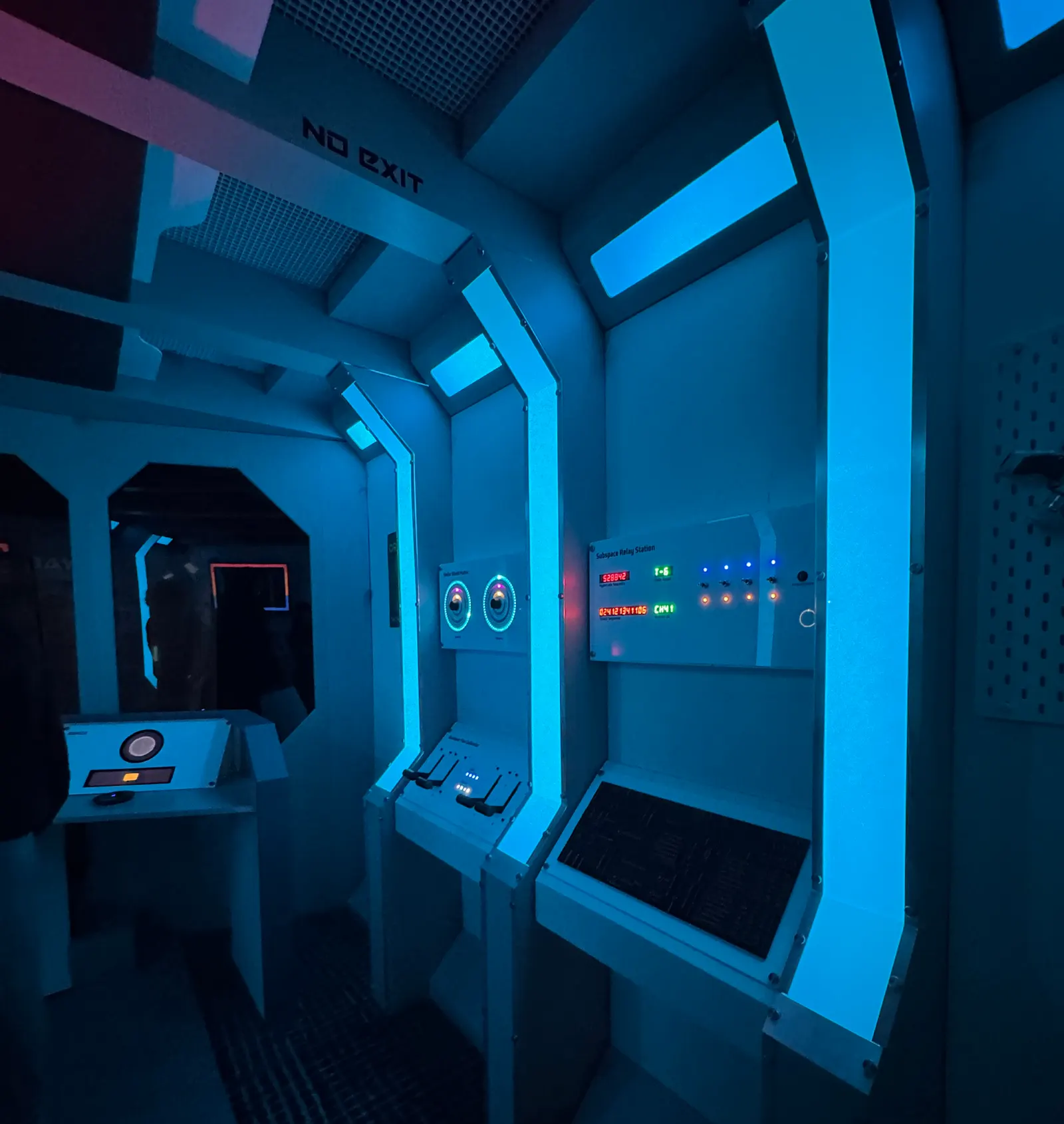
Asymmetrical Co-op Design
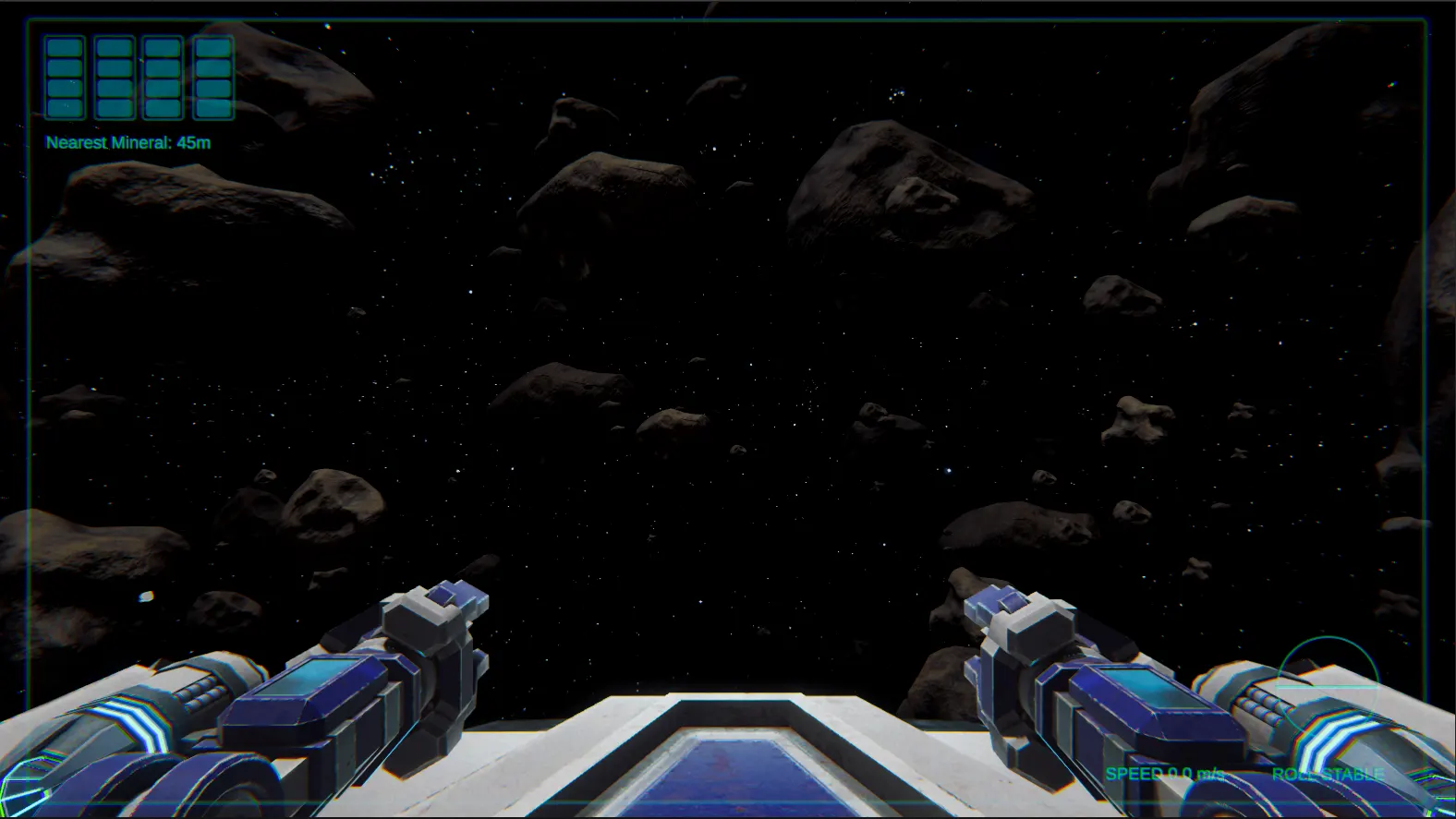
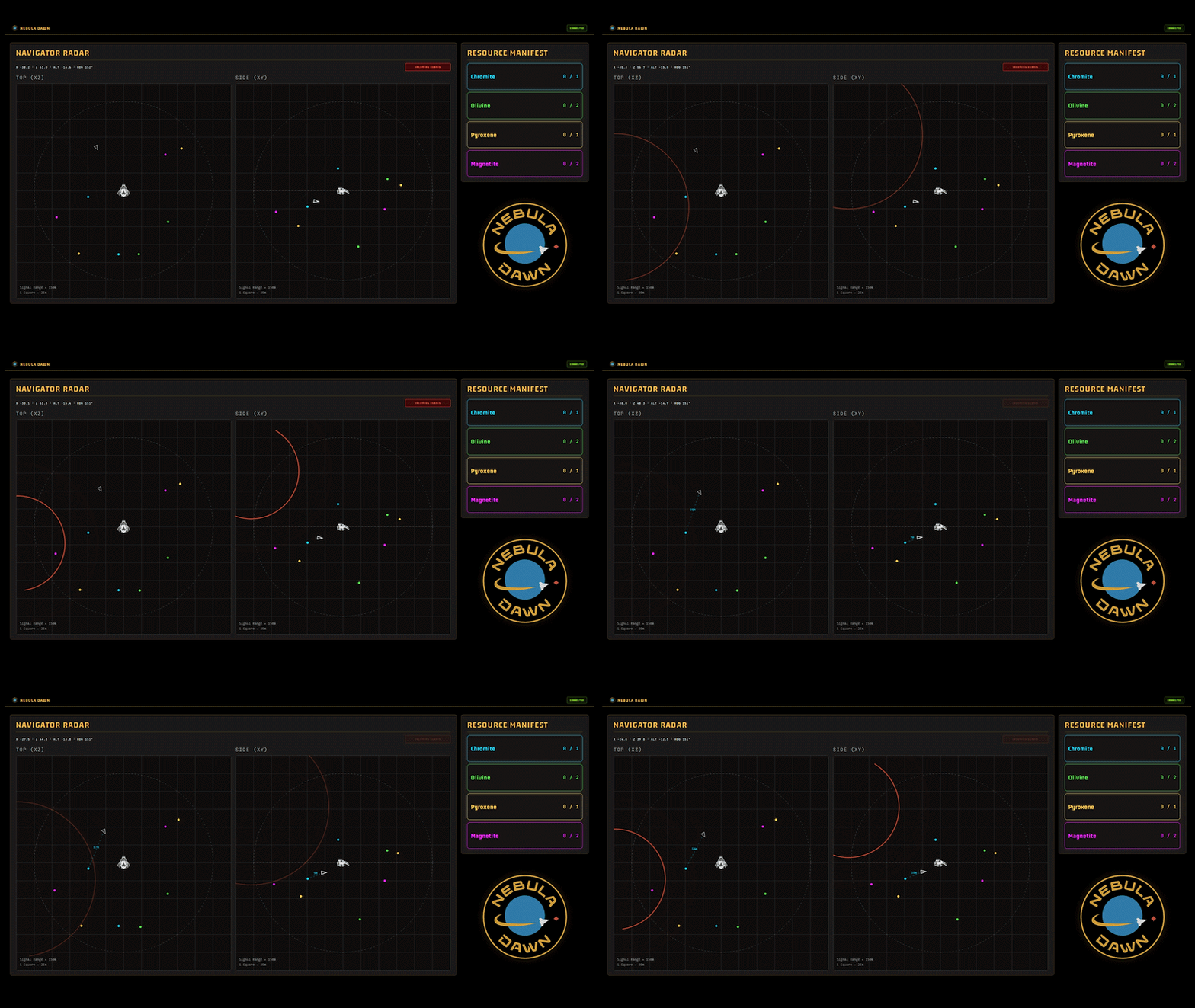
The drone sequence uses asymmetrical cooperative play: participants occupy different roles, receive different information, and must communicate to succeed. The VR pilot directly controls the drone and sees the external environment from inside the headset, while the navigators remain outside VR and interpret a radar interface. Neither role has access to the complete solution, making communication and teamwork central to the experience.
Pilot and Navigator Interfaces
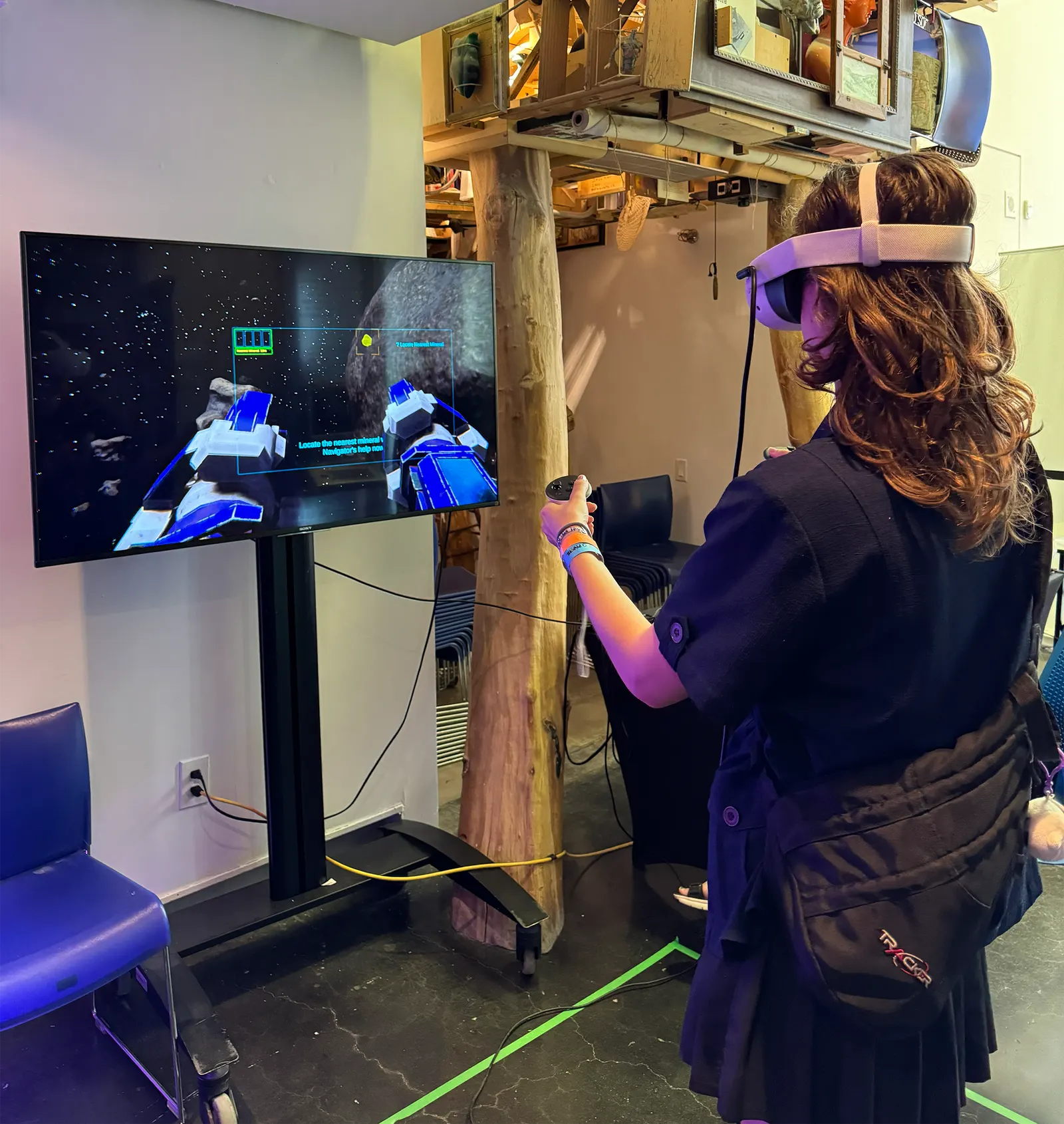
The pilot interface emphasizes spatial navigation and direct interaction within the virtual environment. The navigator interface presents a different representation of the same mission, allowing the navigator to track information and guide the pilot from outside VR.
User-Testing and Public Demonstration
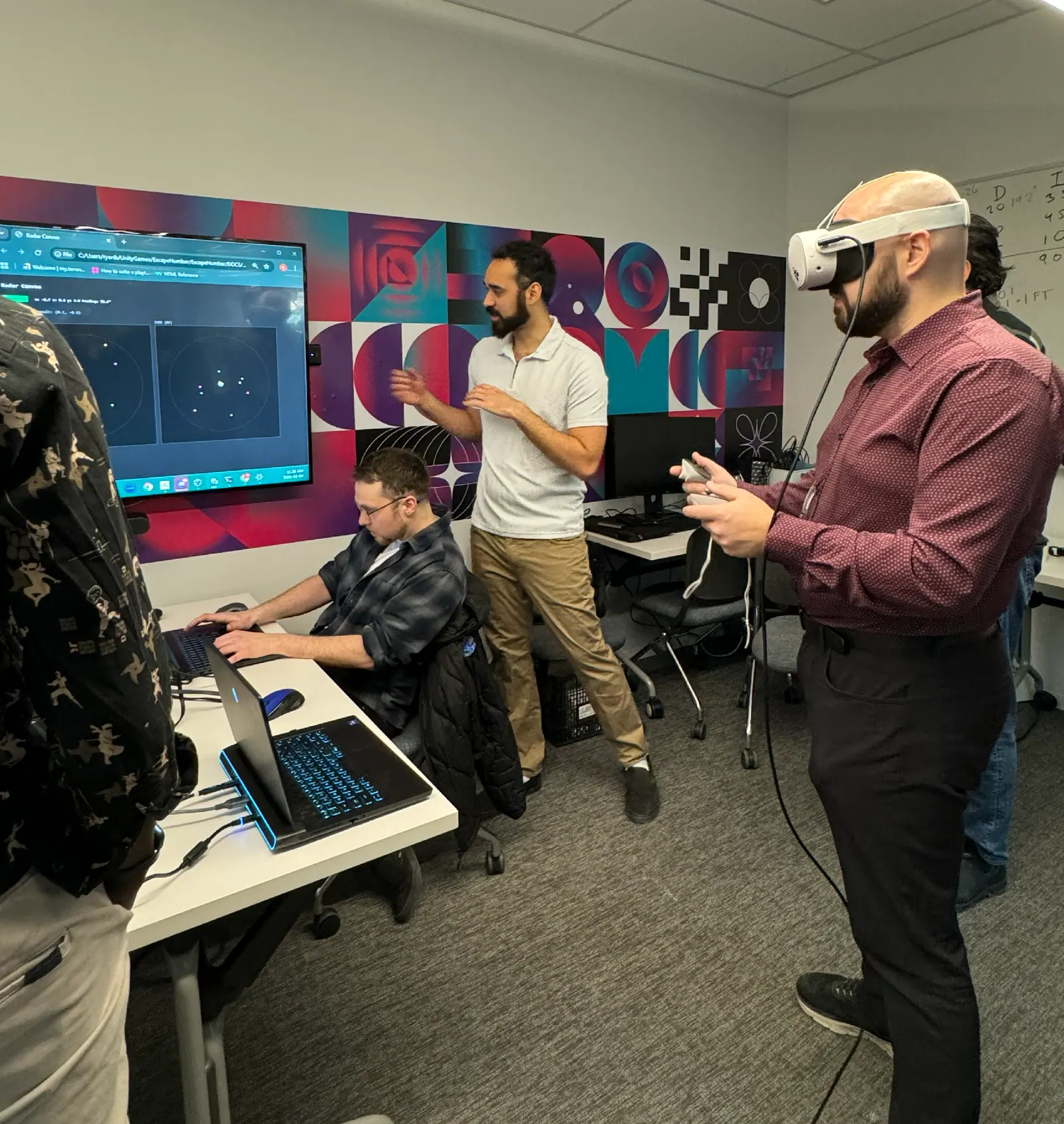
The system underwent structured user testing, giving the team opportunities to observe participants in the headset, monitor the navigator telemetry in real time, and gather feedback on communication and playability. It was later demonstrated at VRTO’s 2026 Summer Showcase and Doors Open Toronto, where it received encouraging informal feedback from visitors.
Development and Iteration
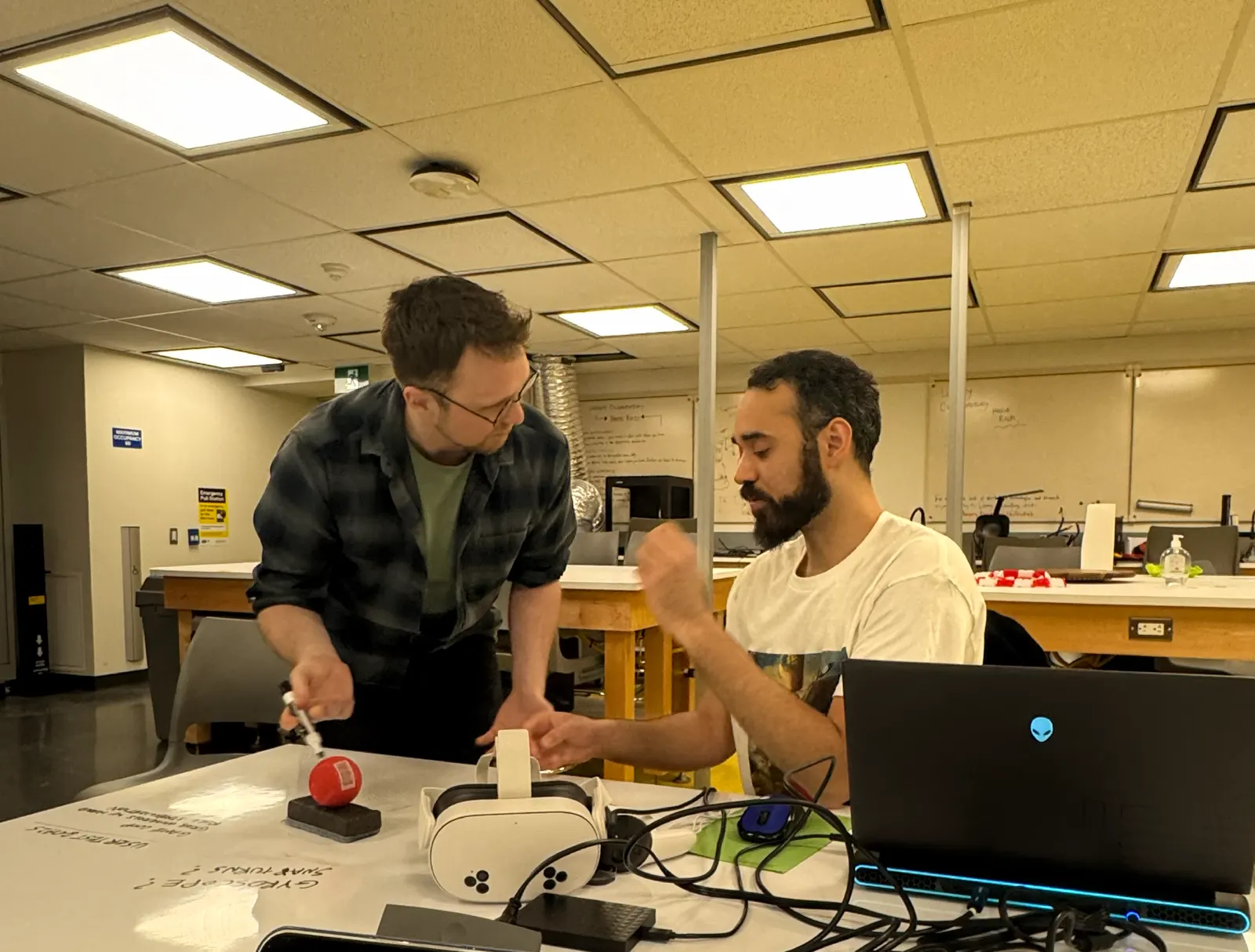
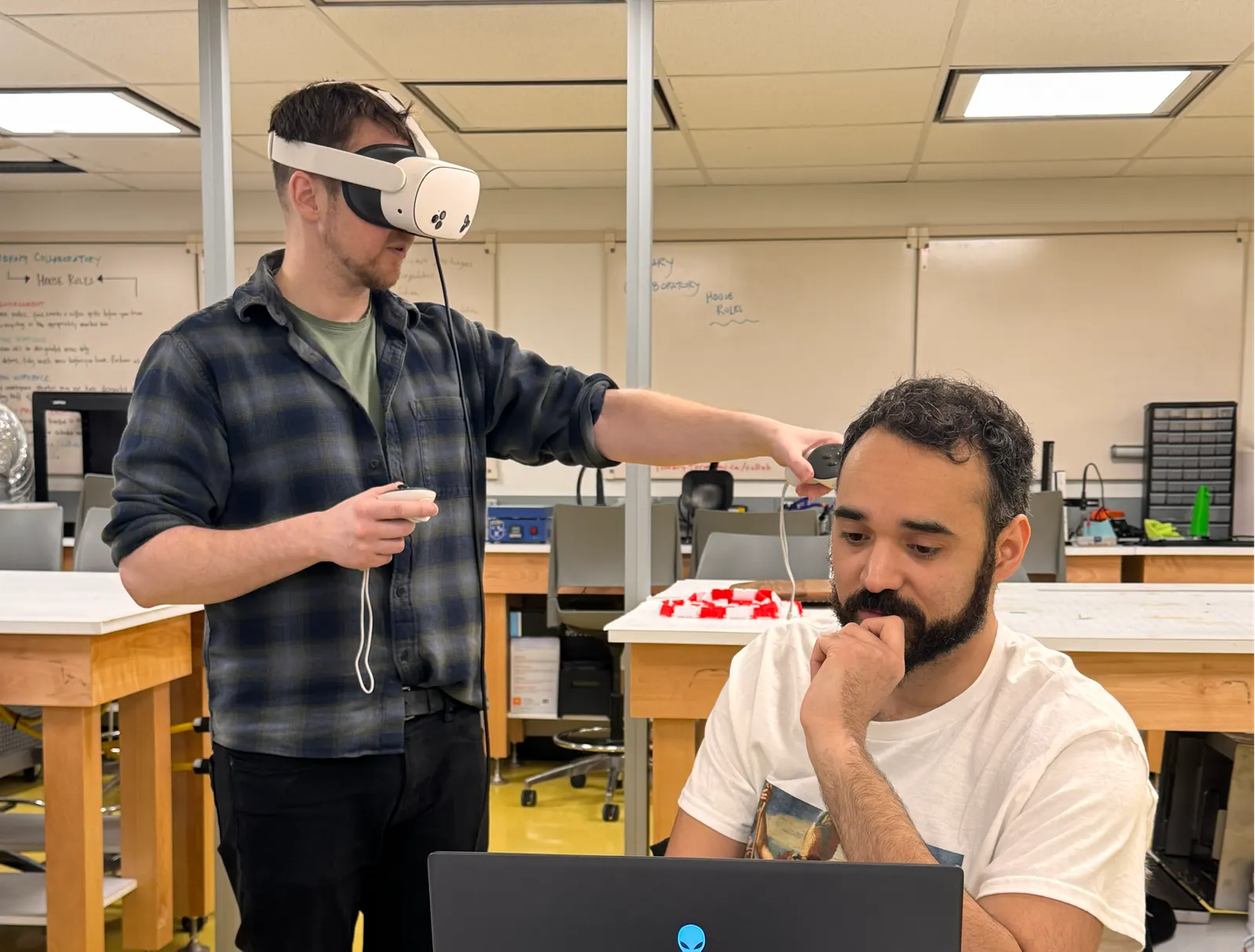
The experience was created in collaboration with Ryan Boyd and Rob Blain over approximately three months. I contributed to development, game design, sound design, and user-testing. This project was my first experience working with VR hardware and software and I hope to work more with this technology in the future.
Photography: Viola Hernandez and Bethany Minor